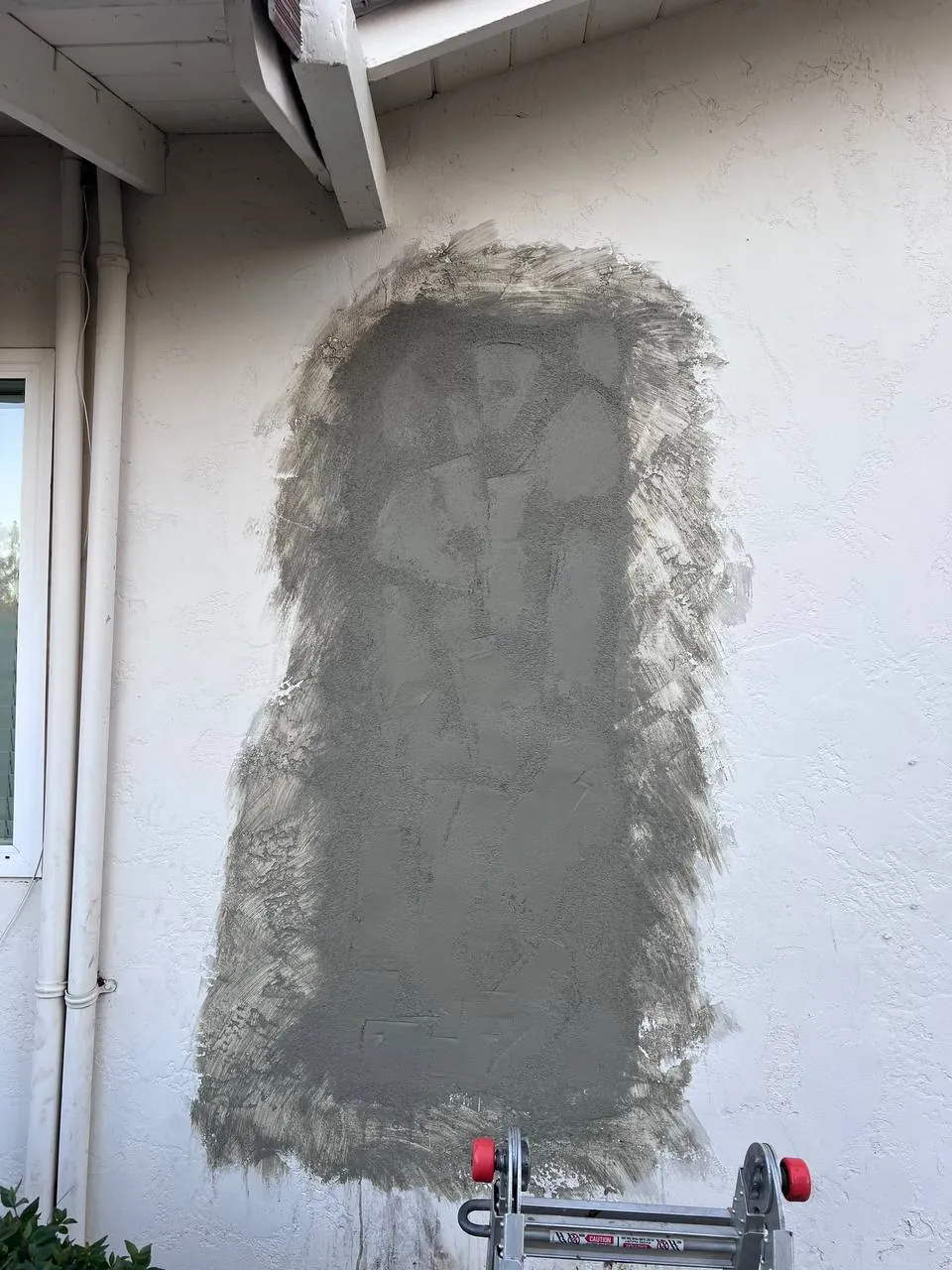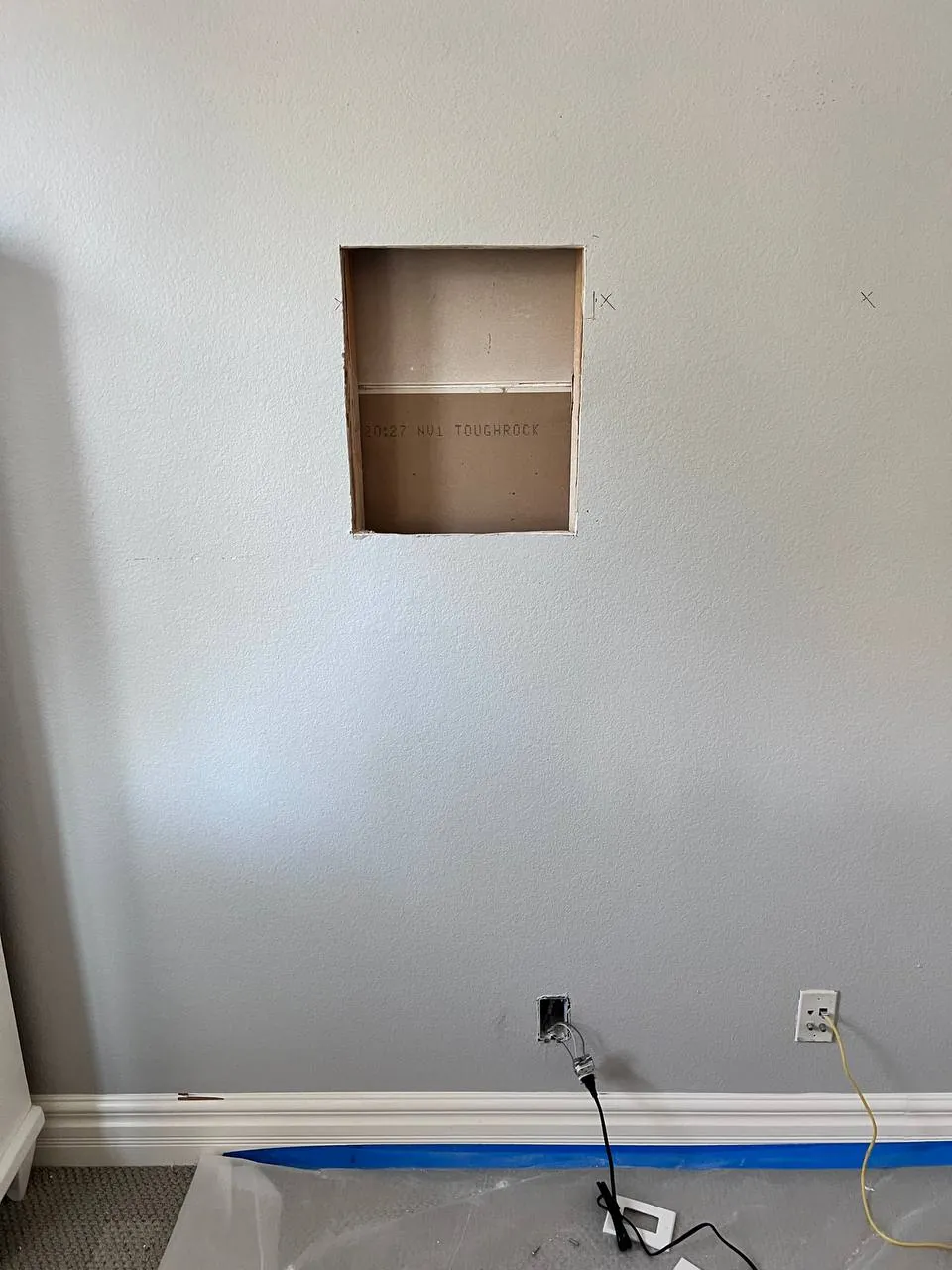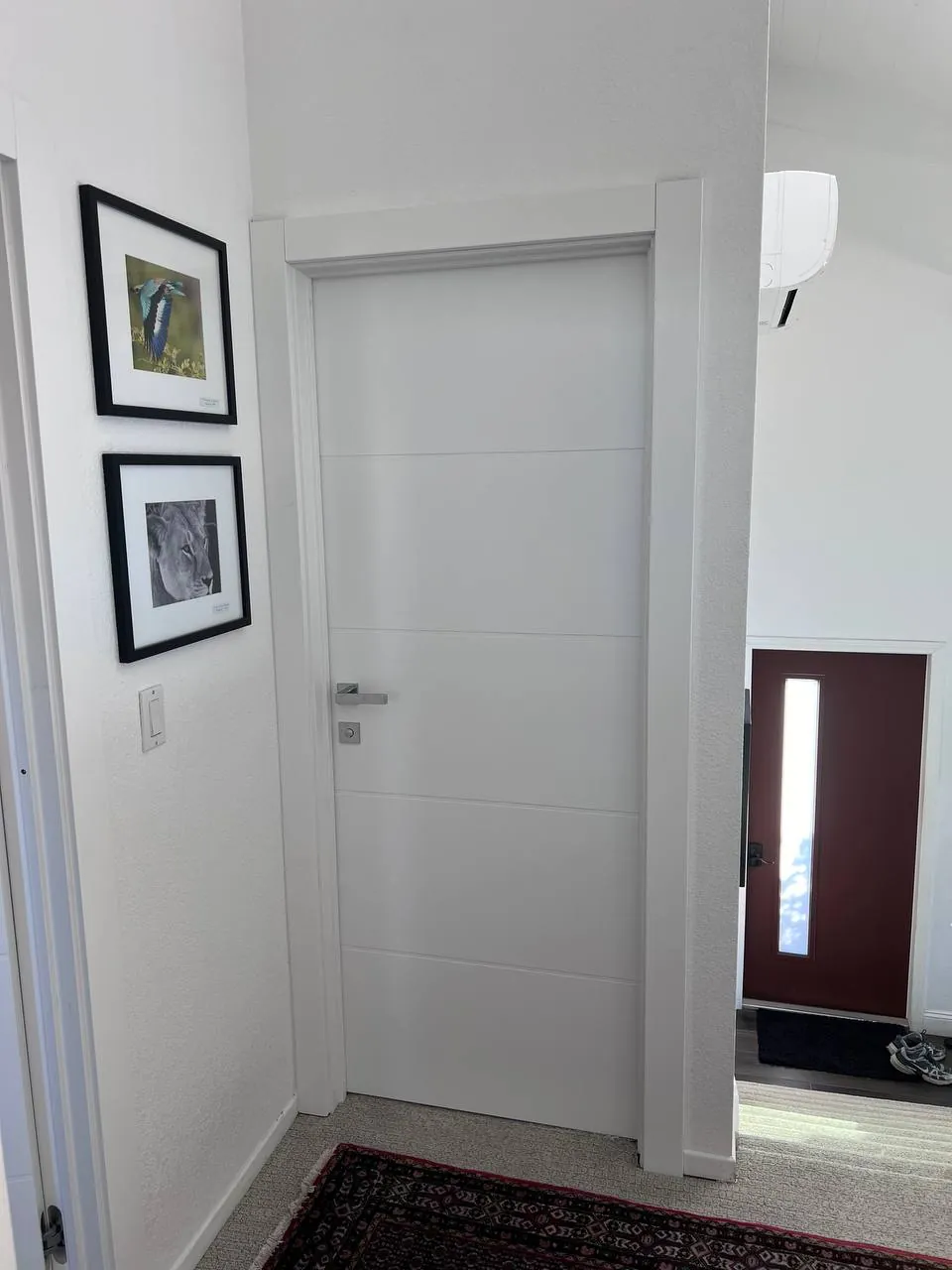
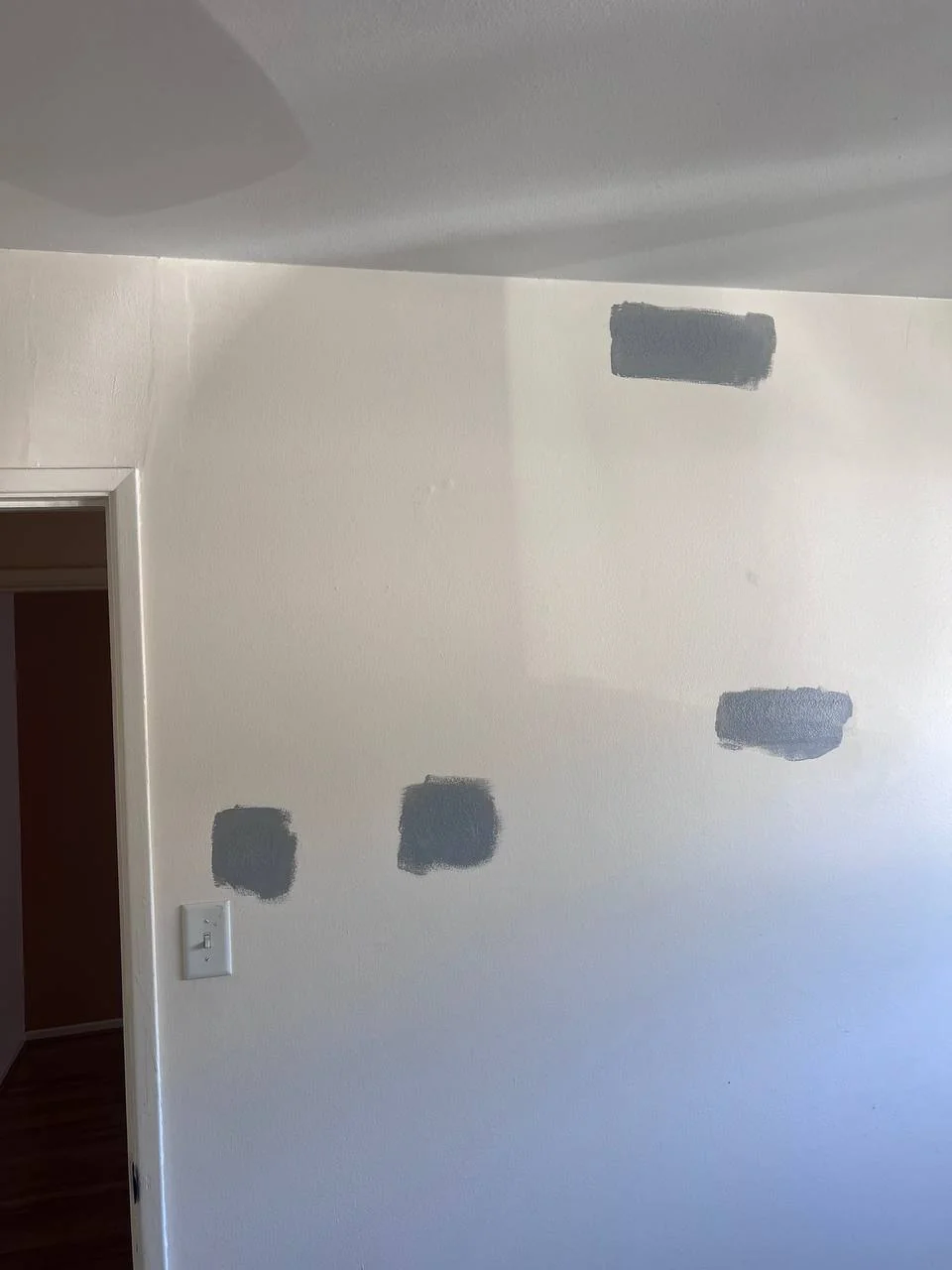
 Before
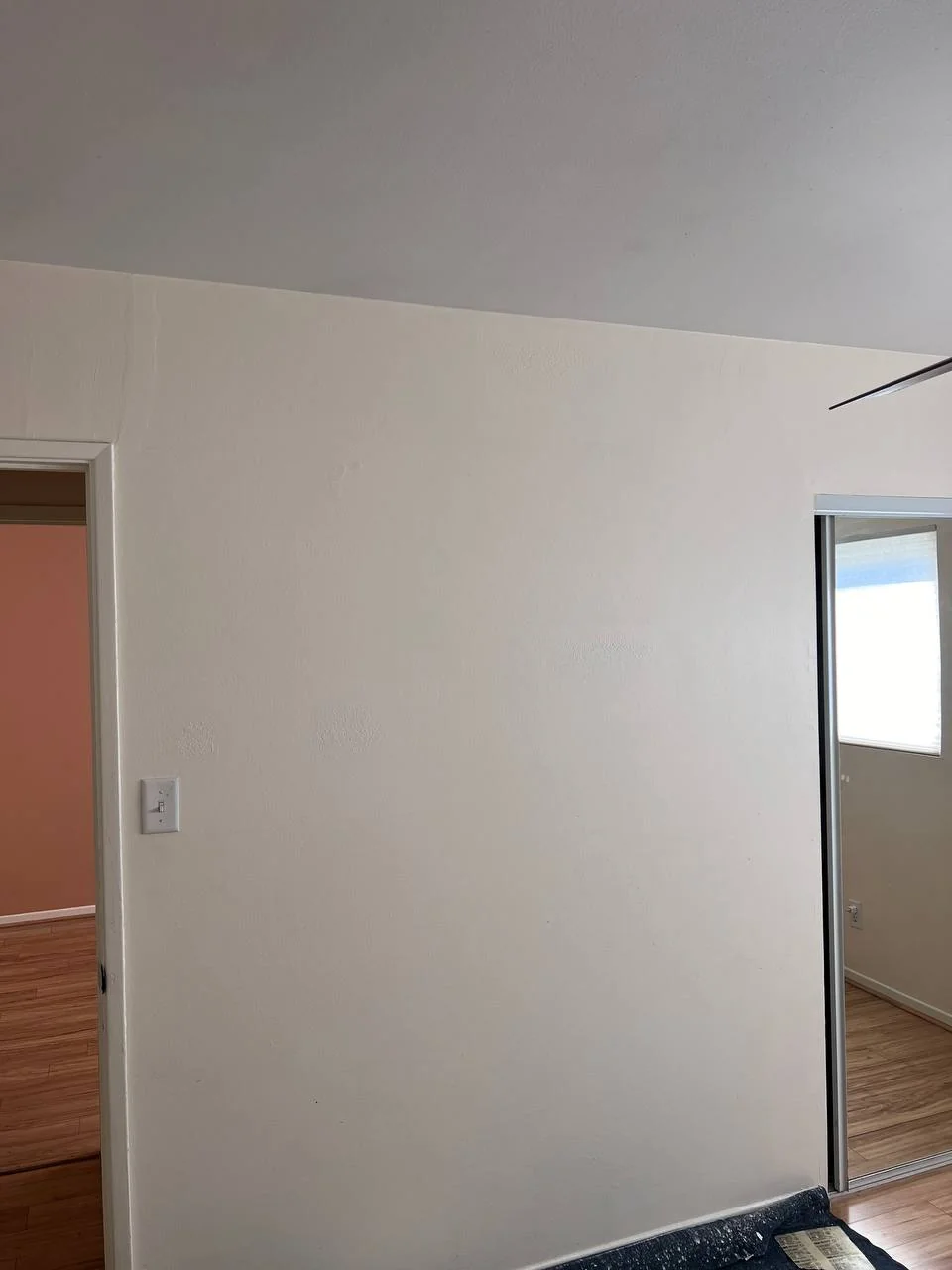 After
AfterSeamless drywall repair across San Diego
A doorknob hole, a crack over the doorway, dents from moving furniture, or a brown water stain from an old leak — they all make a room look tired. Easy Break makes the damage disappear: we cut back to solid board, patch, tape and mud, then match the existing texture and paint so the repair blends into the wall.
San Diego walls come in every finish — smooth, orange‑peel, knockdown, even old popcorn ceilings. We match what you've got so you can't spot the patch afterward.
Drywall problems we fix
- Holes — doorknob dings to large openings from accidents or access work
- Cracks — over doors/windows and along seams from settling
- Water damage — cut out and replace stained, soft or sagging board
- Anchor & nail holes — after taking down shelves, TVs or art
- Texture & popcorn — re‑texture to match or scrape and smooth
- Corner & bead damage — dinged corners rebuilt crisp
Drywall repair prices in San Diego
Most repairs fall in these ranges — you get a fixed price from a photo before we start.
| Repair | What's involved | Price |
|---|---|---|
| Small patch | Nail/anchor holes, small dents, ready to paint | from $99 |
| Medium hole (up to ~8″) | Doorknob hole, patch + texture | from $149 |
| Large patch / cut‑in | Replace a board section, tape & mud | from $219 |
| Water‑damaged section | Remove & replace, texture match | from $249 |
| Texture match + paint | Blend repair into surrounding wall | add‑on, text for quote |
Wall need patching?
Text a photo of the damage — fixed price & same‑day slot back fast.
Texture‑matched & paint‑ready
The difference between a DIY patch and a pro one is the finish. We feather the mud wide, sand it flush, and reproduce your wall's texture — orange‑peel, knockdown or smooth — so it vanishes under paint. We can leave it primed and paint‑ready, or paint it to blend with the existing color.
Why San Diego chooses Easy Break
- Texture matching so patches truly disappear
- Upfront fixed pricing from a photo — no hourly meter
- Same‑day & next‑day across San Diego County
- Clean work — we contain dust and tidy up after
- Licensed, insured & 90‑day workmanship guarantee
Areas we serve
Drywall repair throughout San Diego County, including:
Drywall repair FAQ
How much does drywall repair cost in San Diego?
Can you match my wall texture?
Do you paint after patching?
How long does drywall repair take?
Can you come the same day?
Drywall brands & materials we work with
Most San Diego homes are built with the same handful of products. We carry these on the truck and pick by what your wall actually needs:
- USG Sheetrock UltraLight panels — 1/2" lightweight board for patch‑in sections and full‑sheet replacements; about 30% lighter than standard, easier to handle on stairs and second floors
- USG Sheetrock Mold Tough (purple board) — for bathroom patches, behind toilets, around tubs; fiberglass mat resists mildew where a paper‑faced board would feed it
- James Hardie HardieBacker — 1/4" and 1/2" cement backer for wet areas, tile substrates, and shower curbs; never use regular drywall behind tile
- FibaFuse paperless mesh tape — our default for seams and stress cracks; doesn't bubble like paper tape when the mud's a little wet, doesn't tear like fiberglass mesh on inside corners
- USG Sheetrock All Purpose joint compound (green lid) for taping coats; Plus 3 lightweight (blue lid) for the second and skim coats — sands easier with less dust
- Durabond 45 / 90 setting compound for big patches and structural fills — sets chemically (not by drying) so you can three‑coat in a single day, and it won't shrink the way premix does
- Westpac premixed mud for spray texture loads — consistent viscosity through a hopper gun
- 3M Patch Plus Primer 4‑in‑1 for small anchor and nail holes — fill, prime and paint in one step
- Wet & Set fiberglass patch kit for doorknob‑sized holes when we want a one‑trip fix without cutting a California patch
- Hyde 6", 10" and 14" taping knives and a Hyde mud pan — the boring tools that decide whether a wall is flat
Levels of finish — when L4 is fine and when you need L5
Drywall finish has an industry‑standard scale from Level 1 to Level 5. Most of what we do is Level 4, but it matters which one you need before we quote:
- Level 1 — tape embedded only. Attics, behind cabinets, garage ceilings above the door. We rarely sell this; it's not paint‑ready.
- Level 2 — one coat over tape and fasteners. Tile substrate behind a tub surround, garage walls that won't be painted. Tile and texture hide a lot.
- Level 3 — two coats over tape, one over fasteners. Heavy textures (knockdown, stomp). The texture covers minor inconsistencies.
- Level 4 — three coats over tape, two over fasteners, sanded smooth. This is the standard for flat and eggshell paint and light textures like orange‑peel. 90% of our work.
- Level 5 — full skim coat over the whole surface after Level 4. Required when you have raking light (a south‑facing wall with a window beside it), dark or glossy paint, or a smooth modern finish. Costs more because there's effectively another mud coat over everything; we'll flag this in the quote, never sneak it.
Damage taxonomy — the right repair for each kind of hole
Drywall repair has a sequence, and using the wrong one costs you. Quick decoder:
- Small anchor & nail holes — 3M Patch Plus Primer on a flexible knife, two passes, light sand, spot prime. Done in 20 minutes.
- Doorknob impact (1"–4") — either a Wet & Set fiberglass patch with two skim coats, or a "California patch": cut a scrap of drywall a few inches larger than the hole, score and snap to remove the gypsum behind a paper border, butter the paper with mud and press it in flush. No backer board, no screws, no visible edges.
- Large holes (6" and up) — cut the opening square back to half a stud either side, add 1×3 wood cleats top and bottom, fit a piece of UltraLight, screw it off, FibaFuse the seams, three‑coat with all‑purpose, finish with Plus 3.
- Water damage — first rule: find the source and get it dry before any drywall goes up. We cut out to dry framing, replace insulation if it's wet (R‑13 batts compress and won't recover), reframe any rotted blocking, then patch as above. If the leak isn't fixed we won't close the wall.
- Cracks at door & window corners — V‑groove the crack with a utility knife, dust it out, embed FibaFuse mesh tape, three‑coat. These are stress cracks from racking, not gaps in the mud.
- Settlement cracks along seams — same FibaFuse paperless tape approach; paper tape on these tends to telegraph back through within a year as the seam moves.
- Anchor strip‑out (the hole where a Molly or plastic anchor pulled out a chunk) — either an oversized toggle bolt with a fender washer for a hidden bracket, a Hilti HHD‑S for masonry transitions, or we cut a clean square and California‑patch it. We don't just shove the old anchor back in.
Texture matching — orange peel, knockdown, smooth
The repair is invisible only if the texture matches. We dial in each type by hand:
- Orange peel — hopper gun with mud thinned to a thick‑pancake‑batter consistency, 60 psi at the tip, fine nozzle adjustment. We shoot a test card first, dial it in, then hit the wall with two light passes feathered into the surrounding texture.
- Knockdown — same orange‑peel base coat, then we let it flash 10–20 minutes (humidity and temperature dependent — slower at the coast, faster inland) and pull a wide drywall knockdown knife across to flatten the peaks without smearing.
- Smooth (Level 5) — skim with a 14" knife in two directions, sand with 220, prime, repeat. There's no shortcut.
- Popcorn ceilings — scrape wet with a garden sprayer and 6" scraper, re‑tape any taping seams that the scrape exposed, two skim coats, sand, prime. If you want to retexture popcorn instead of going smooth, we can do that too, but most San Diego homeowners are scraping it off.
Corner bead & the inside‑corner detail
Outside corners take the most damage in a house — kids' shoulders, vacuum cleaners, moving day. We replace dinged bead with the right type for the wall:
- Paper‑faced metal bead — our default for crisp 90° corners; embeds in mud with a corner roller, won't crack the way nailed metal does
- Vinyl bullnose — for rounded corners common in 1990s–2000s SD tract homes (Carmel Valley, Scripps Ranch, Eastlake); you have to match the existing radius (3/4" is standard)
- Square metal bead — old construction; we still use it on garage walls and rough areas
Lath‑and‑plaster walls (older Hillcrest, North Park, South Park)
Pre‑1950 SD homes — lots of Hillcrest, North Park, South Park, Mission Hills, Burlingame — have wood lath with three‑coat plaster, not drywall. Joint compound doesn't bond properly to old plaster, so we patch with bonding plaster (USG Structo‑Lite or a plaster of paris base coat) over the lath keys, then a finish coat of plaster or mud. We mesh‑stitch broken lath sections with metal lath stapled into adjacent studs before plastering — without this, the patch falls out the first time a door slams.
If the plaster is bulging away from the lath (you can press it and feel it move), we either re‑attach it with plaster washers and 2" coarse screws into the studs, or cut out the loose section and patch with 1/2" UltraLight shimmed flush to the surrounding plaster face.
What we don't do
We patch, we don't gut. Full re‑rocking of a room (every wall replaced) is a drywall‑contractor job — they bring 12' boards on a trailer, run a stilts‑and‑bazooka taping rig, and need a dumpster. We're set up for repairs from a small dent up to a 4×8 sheet replacement. If you need the whole room re‑boarded we'll tell you and recommend a SD drywall sub.
We also don't do popcorn‑ceiling scraping in pre‑1979 homes without a lab test first — popcorn texture from that era can contain asbestos, and disturbing it without proper containment is a health hazard and a Cal/OSHA violation. We collect a small sample, send it to a SD‑area lab ($35–75, results in a day or two), and either proceed or refer you to a licensed abatement company. Same goes for any pre‑1978 wall where the paint might be lead — we test before we sand.