
Lighting & ceiling fan installation across San Diego
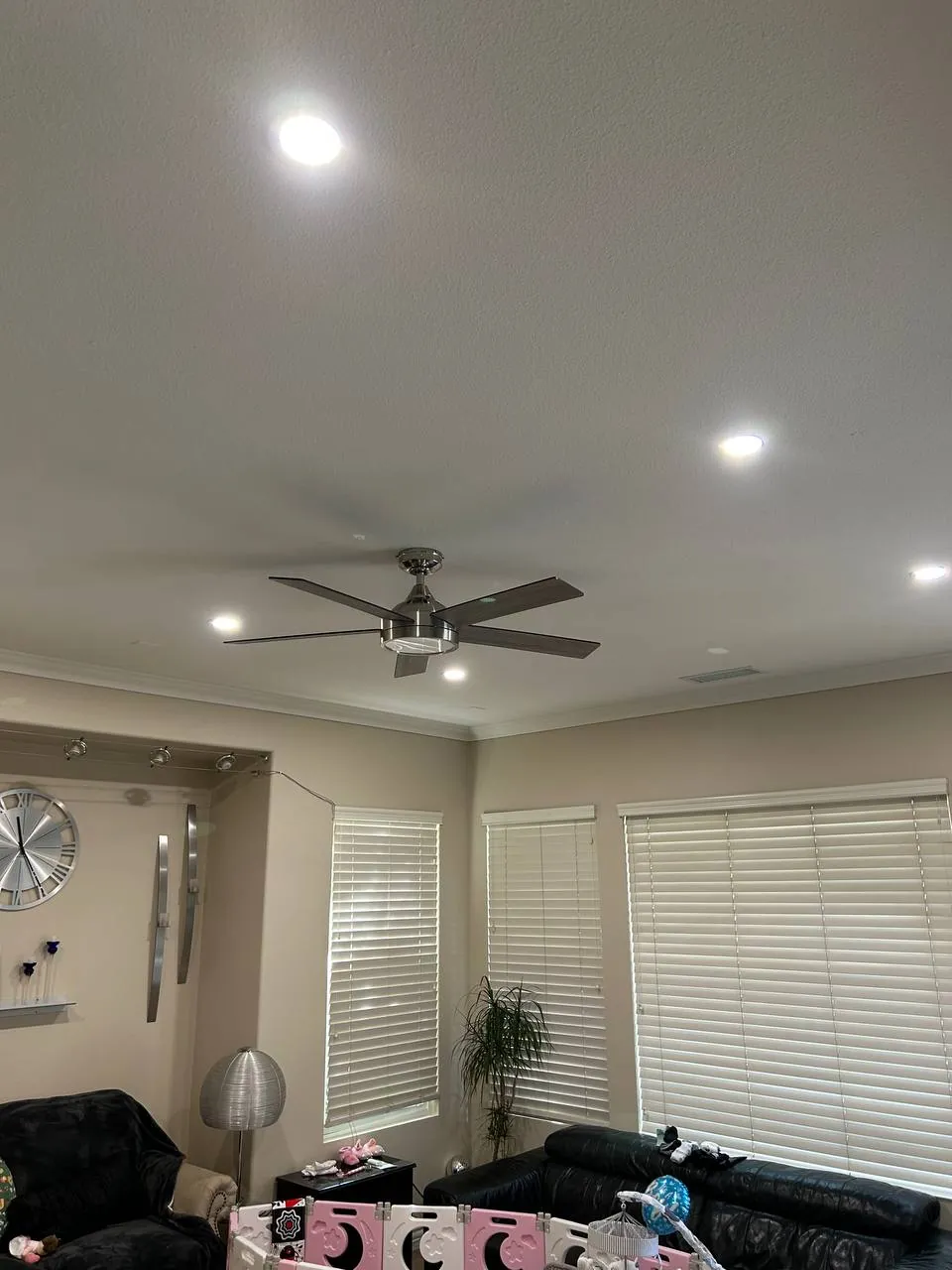
Swapping a builder‑grade fixture for a statement chandelier, putting a fan in the bedroom for those warm San Diego nights, or finally getting a dimmer in the dining room — Easy Break handles light and fan installs cleanly and safely. We kill the power at the breaker, mount to the box (adding a fan‑rated brace where needed), wire it correctly, balance the fan so it doesn't wobble, and take the old fixture away.
We install your fixture or fan — bought it online or at the store? We'll fit it. Replacing like‑for‑like is straightforward; if you want a light where there isn't one, we'll tell you upfront what's involved.
What we install
- Ceiling fans — bedroom, living‑room, patio & fan‑with‑light combos
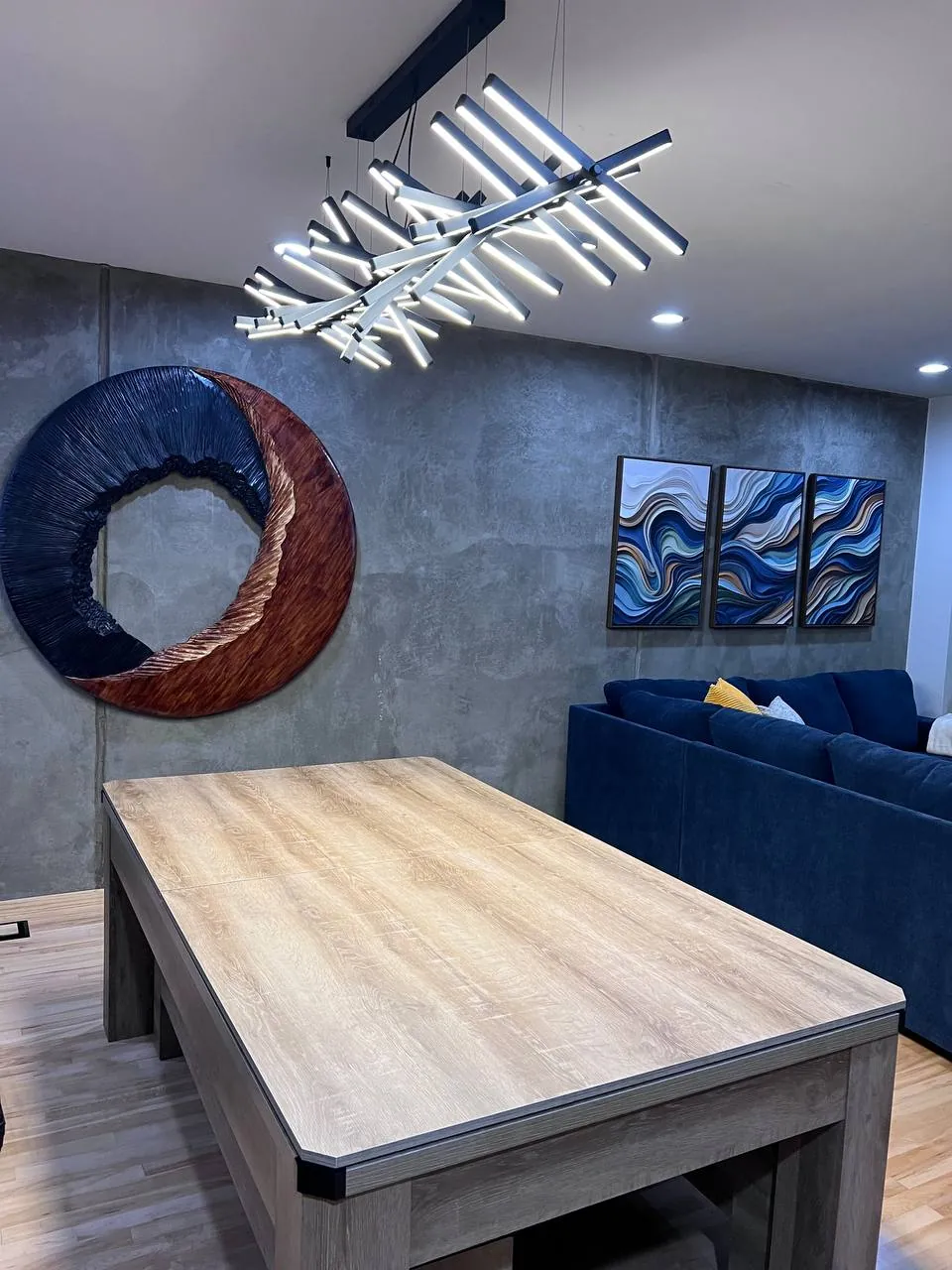
- Chandeliers & pendants — dining, entry & stairwell (incl. higher ceilings)
- Flush & semi‑flush ceiling lights
- Recessed / can lights & LED retrofits
- Vanity & bathroom lights
- Dimmer switches & smart switches
- Under‑cabinet & closet lighting
Lighting & fan install prices in San Diego
Like‑for‑like swaps are quick — here are typical ranges, with a fixed price from your photo before we start.
| Service | What's involved | Price |
|---|---|---|
| Light fixture swap | Replace existing flush/pendant fixture | from $89 |
| Chandelier (standard ceiling) | Assemble & hang, balance, test | from $129 |
| Ceiling fan swap | Replace existing fan, balance | from $129 |
| New ceiling fan (add fan‑rated box) | Brace + box where a light was | from $189 |
| Dimmer / smart switch | Replace switch, set up | from $79 |
| High / vaulted ceiling | Extra access & equipment | text for quote |
Got a fixture to install?
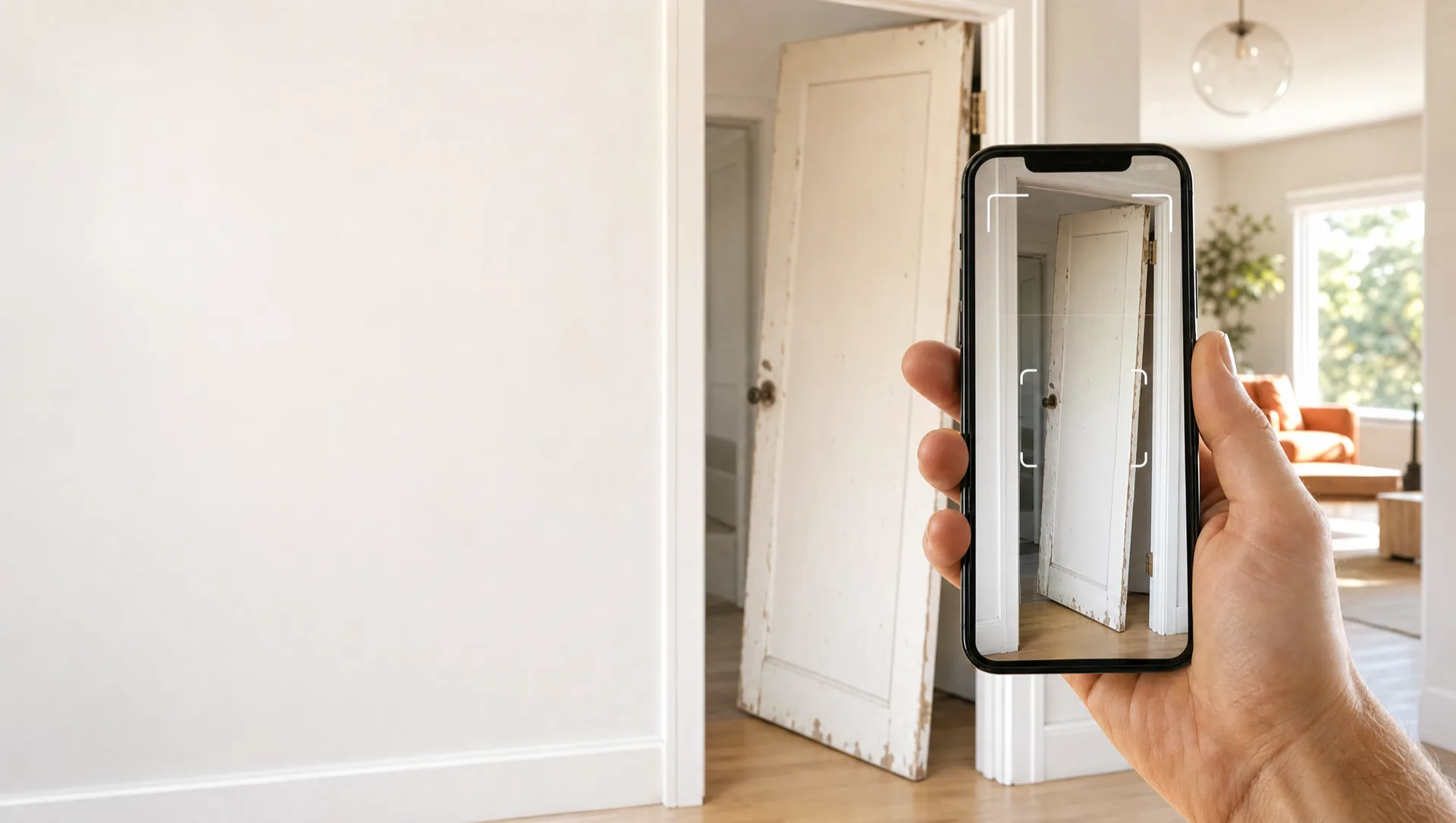
Text a photo of the spot & the new fixture — price back fast.
Done safely & to code
Lighting is electrical work, so it's done right: power isolated at the panel, connections made and secured properly, fans hung from a fan‑rated box so they never come loose, and everything tested before we leave. For larger electrical jobs (new circuits, panel work) we'll let you know if a licensed electrician is the better call — no upselling you on work you don't need.
Why San Diego chooses Easy Break
- Upfront fixed pricing from a photo — no hourly meter
- Same‑day & next‑day across San Diego County
- We fit your fixture, balance fans, haul the old one away
- Fan‑rated mounting so nothing wobbles or drops
- Licensed, insured & 90‑day workmanship guarantee
Areas we serve
Lighting & ceiling fan installation throughout San Diego County, including:
Lighting & ceiling fan FAQ
How much does it cost to install a ceiling fan in San Diego?
Can you install a chandelier on a high or vaulted ceiling?
Do you install a light fixture I bought myself?
Can you add a dimmer or smart switch?
Do you take the old fixture away?
Brands we install
We install whatever you bought. Quick notes on what we see most:
- Hunter and Hampton Bay — the bread‑and‑butter ceiling fans in San Diego homes; reliable, easy to balance, parts are everywhere
- Casablanca — Hunter's premium line; quieter motors, nicer fit and finish for owner‑occupied living rooms
- Big Ass Fans (Haiku) — high‑end DC‑motor fans for great rooms and high ceilings; we've installed plenty in La Jolla and Carmel Valley new builds
- Minka‑Aire and Monte Carlo — mid‑to‑premium decorative tier; Minka's flush‑mount low‑profile DC fans are our go‑to for 8' ceilings where a downrod won't clear blade height
- Kichler and Progress Lighting — designer chandeliers and pendants we hang weekly
- Lutron Caseta — our default smart‑dimmer recommendation; no neutral wire required on most models, works with virtually every LED bulb
- Lutron Diva CL — non‑smart but the best dumb LED dimmer made (CL = LED/CFL‑rated curve); buzzes and flickers go away when you swap a generic dimmer for a Diva CL
- Leviton Decora — standard switches, dimmers and smart switches at every price point
Ceiling fan tier & budget guide
Fan pricing has clear tiers and the jumps are real. What you actually feel when you spend more, in 2026 San Diego retail terms:
- $80–$180 (Hampton Bay / lower Hunter) — basic AC motor, pull‑chain or wall‑switch control, 3‑speed. Fine for guest bedrooms; you'll hear the motor at night in a quiet room.
- $180–$350 (mid Hunter / Casablanca / lower Minka) — quieter AC motors, basic remote, often integrated LED light kit. The sweet spot for primary bedrooms and living rooms.
- $350–$700 (Minka‑Aire DC / Casablanca DC) — DC motor (smaller, quieter, ~70% less power draw), 6 speeds, reverse, often Wi‑Fi/smart. Big upgrade in feel — no audible motor hum, slow reverse for winter.
- $700–$1,500+ (Big Ass Haiku L / Haiku H‑series, Modern Forms) — true premium: DC motor with custom airfoil blades, app + voice control, indoor‑rated and damp/wet‑rated options, often Matter/Thread compatible. Worth it for great rooms with the fan in your sightline.
Heads‑up on outdoor‑rated fans for patios and pergolas: confirm "wet‑rated" (not just "damp‑rated") if it'll see horizontal rain — Carlsbad and Encinitas backyards get more weather than people expect. Honeywell Belmar, Hunter Cassius and the Big Ass i6 Outdoor are our common picks.
Smart‑switch decision tree
"Should I just buy a smart bulb instead?" No — smart switches beat smart bulbs in every scenario except a single lamp. Reasons: bulbs need power (so the switch must stay on, which guests always flip off); switches control all bulbs on the circuit at once; switches survive bulb replacement. The questions that actually decide which switch:
- Do you have a neutral (white) wire in the switch box? Open the existing switch plate and look. Most homes built after ~1985 have one. If yes → almost any smart switch works (Lutron Caseta DVRF, Leviton Decora Smart D26HD, Inovelli Blue Series, GE Cync). If no → you need a no‑neutral model: Lutron Caseta PD‑6WCL (our default) or one of the few "no‑neutral" Aqara/SwitchBot units. We open the box to confirm before quoting.
- Is it a 3‑way (two switches control one light)? Most Caseta dimmers handle 3‑way without a companion. Other brands need a paired companion switch — Leviton DD0SR, Decora Smart 3‑way. We identify the load wire and traveler before swapping.
- What's on the circuit? Pure LED → any LED‑rated dimmer. Mixed LED + incandescent legacy → use Lutron Caseta or Diva CL specifically (their dimming curve covers both). Magnetic low‑voltage transformers (some pendant tracks) → MLV‑rated dimmer required.
- How smart do you want? Caseta is the most reliable platform — bridge required but rock‑solid latency, works with HomeKit, Alexa, Google. Decora Smart D26HD is direct Wi‑Fi (no bridge). Inovelli Blue is Zigbee/Z‑Wave for Hubitat / Home Assistant power users; the LED bar on the switch face is genuinely useful for notifications.
Recessed lighting & junction‑box scenarios
If you're not adding new cans, the cheapest path is almost always a retrofit LED disc/wafer in the existing ceiling box. We do that one a couple times a week:
- Existing junction box, swap to wafer LED — 15 minutes, $89/fixture; usually Halo HLB6 or Lithonia WF6 in 6", color‑selectable (2700K/3000K/3500K/4000K/5000K via switch on the back). One per box.
- No existing fan‑rated box for a fan replacement — add a Westinghouse SaF‑T‑BRACE through the existing hole plus an Arlington FBRS415 fan box. No attic access needed. About 35 minutes, +$60–$80 in materials over the fan install price.
- Want a new light where there's nothing — that's a new circuit pull, which we don't do (handyman scope ends at the existing box). We refer to a licensed San Diego electrician for new circuits and tie the fixture install back into the same visit if scheduling works.
- Pendant cluster over a kitchen island — most pendants ship with a single mounting plate but homeowners often want 3 in a row. We add a 12" or 24" linear canopy (Tech Lighting or Kichler MULTI) and balance the drop heights so the bottoms line up — they look uneven if you just measure from the cord.
LED color temperature & bulb spec cheat sheet
Picking the wrong color temperature is the #1 reason a fancy new fixture still looks bad. Our rule of thumb:
- 2700K — classic incandescent warm; bedrooms, primary living spaces, restaurants
- 3000K — warm white but slightly more crisp; kitchens, hallways, master baths (most common San Diego new‑build spec)
- 3500K — neutral; offices, guest baths, mudrooms
- 4000K — cool white; garages, laundry rooms, workshops
- 5000K+ — daylight; mostly outdoor security, not interior unless you want it to feel like a hospital
For dimmable bulbs check the CRI (Color Rendering Index) — 90+ CRI looks dramatically better than the standard 80 CRI for the same wattage. Cree, Soraa and Philips Ultra Definition are our go‑to high‑CRI brands. For chandeliers with exposed bulbs, vintage Edison‑style filament LEDs (Bulbrite Nostalgic) look right where regular LEDs read wrong.
Fan specs that actually matter
Most "my fan wobbles" or "my fan barely moves air" complaints come from picking the wrong fan or skipping the downrod math. Quick reference:
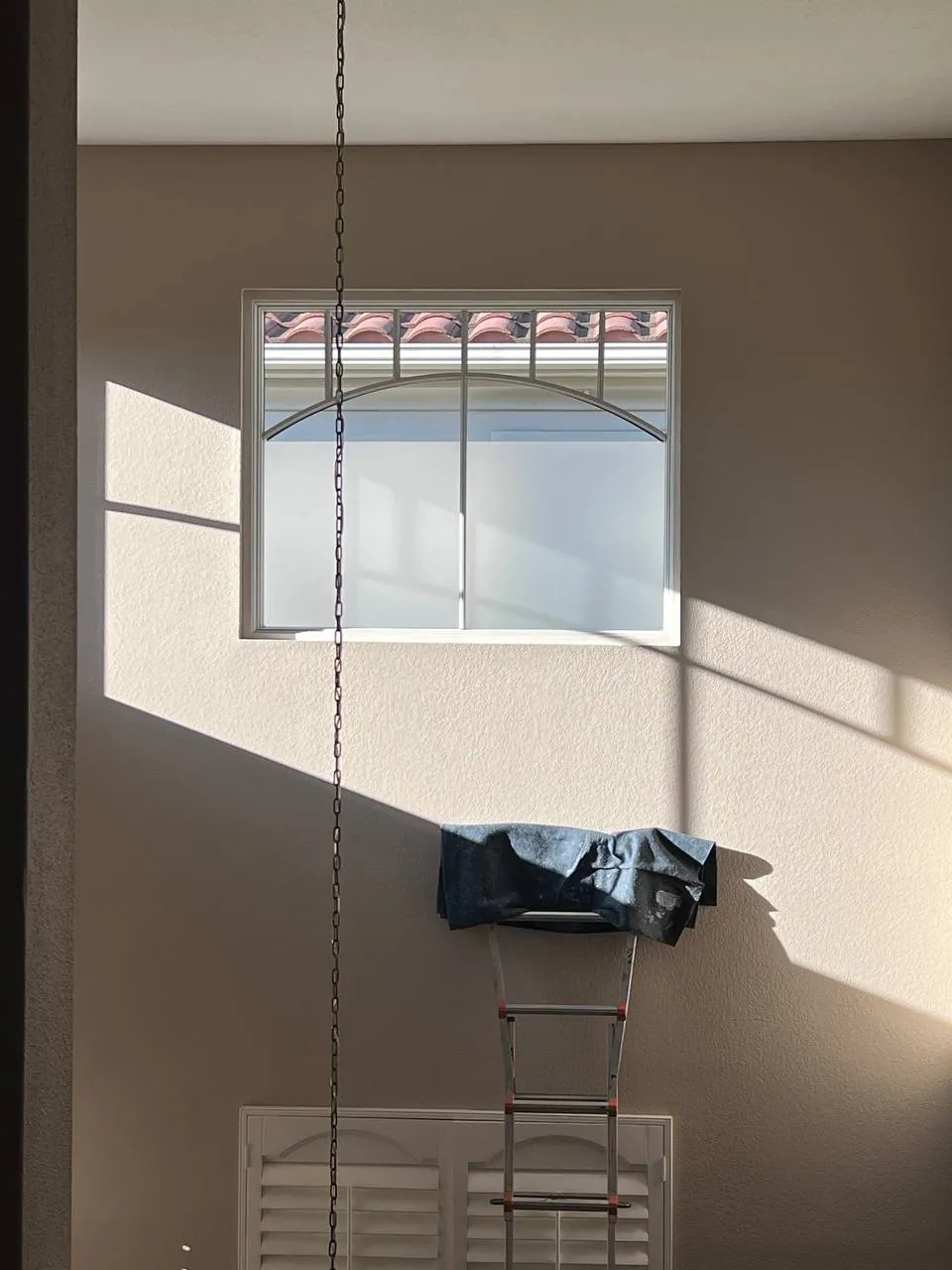
- Downrod by ceiling height — 8' ceiling: flush mount or "hugger". 9': 6" downrod. 10': 12". 11'–12': 18"–24". 12'+ vaulted: 36"+ with a sloped‑ceiling adapter. Fan blades should sit 8–9 feet off the floor for proper airflow.
- CFM rating — aim for 50+ CFM per 100 sq ft of room. A bedroom needs 4,000–5,000 CFM, a great room 6,000+. Big Ass Haiku L's push 5,800 CFM at low watts.
- Blade pitch — 12°–15° pitch moves real air. Decorative fans at 8°–10° are just spinning prettily.
- UL‑Listed fan‑rated box — fans need a fan‑rated ceiling box, not the pancake box that a light fixture sits on. If yours is missing, we install a brace through the ceiling (no attic access needed for the Westinghouse SaF‑T‑BRACE type) and an Arlington fan box.
Common gotchas we see in San Diego homes
- No existing fan‑rated box — a pancake or plastic light box won't carry a wobbling fan; we add a brace and proper box every time
- Vaulted / sloped ceilings — need a downrod and a sloped‑ceiling adapter (most fans include one for up to 30° slopes; steeper needs the manufacturer's accessory)
- Retrofit recessed lighting — instead of cutting cans into the ceiling, we usually fit LED disc/wafer lights that wire to an existing junction box; cleaner and faster than traditional cans
- 3‑way and 4‑way switches — common in stairwells and long hallways; many smart switches need the load wire identified and only certain models support 3‑way without a companion switch
- LED dimmer compatibility — LED bulbs need an LED‑rated dimmer (Lutron Diva CL, Caseta) or they buzz, flicker, or won't dim low. Old incandescent‑era dimmers will not work right with LED.
- C‑wire requirement — most smart switches need a neutral (white) wire in the box; older Hillcrest, North Park and South Park homes often don't have one, so we spec a Caseta (no‑neutral) instead
- Vintage push‑button switches in 1920s–40s craftsman homes — beautiful but obsolete; we replace with modern Decora or restoration‑style push buttons that meet code
- Chandelier weight limits — anything over 50 lb (or with a long downrod) needs extra blocking; we won't hang a heavy chandelier on a marginal box
Honest scoping
We're a handyman crew, not a licensed electrical contractor. Anything that means adding a new circuit, panel or sub‑panel work, outdoor underground lighting trenches, EV chargers, or knob‑and‑tube rewiring needs a C‑10 electrician — we'll tell you up front and refer you out. Fixture swaps, switch swaps, fan installs and recessed retrofits within an existing circuit are our daily work.