Outdoor living built for San Diego backyards
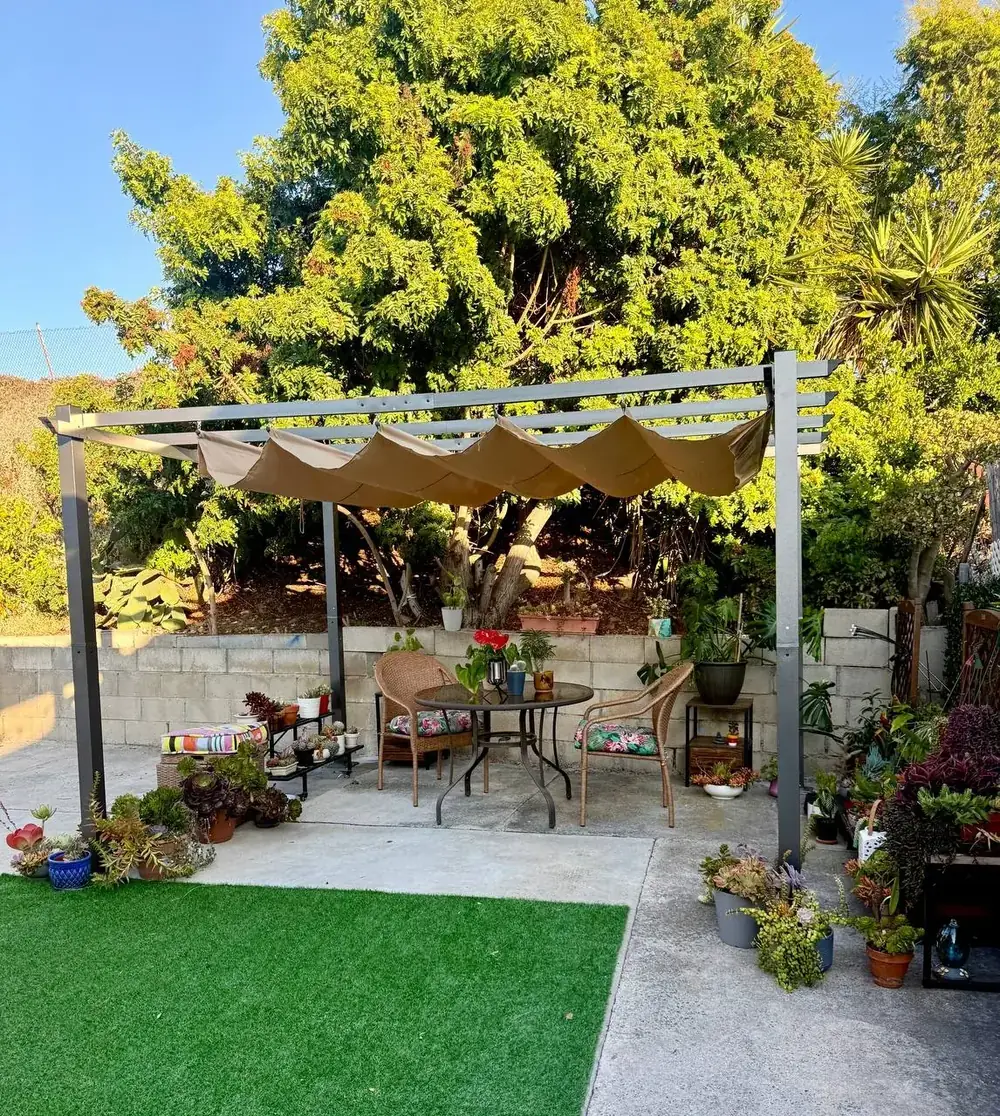
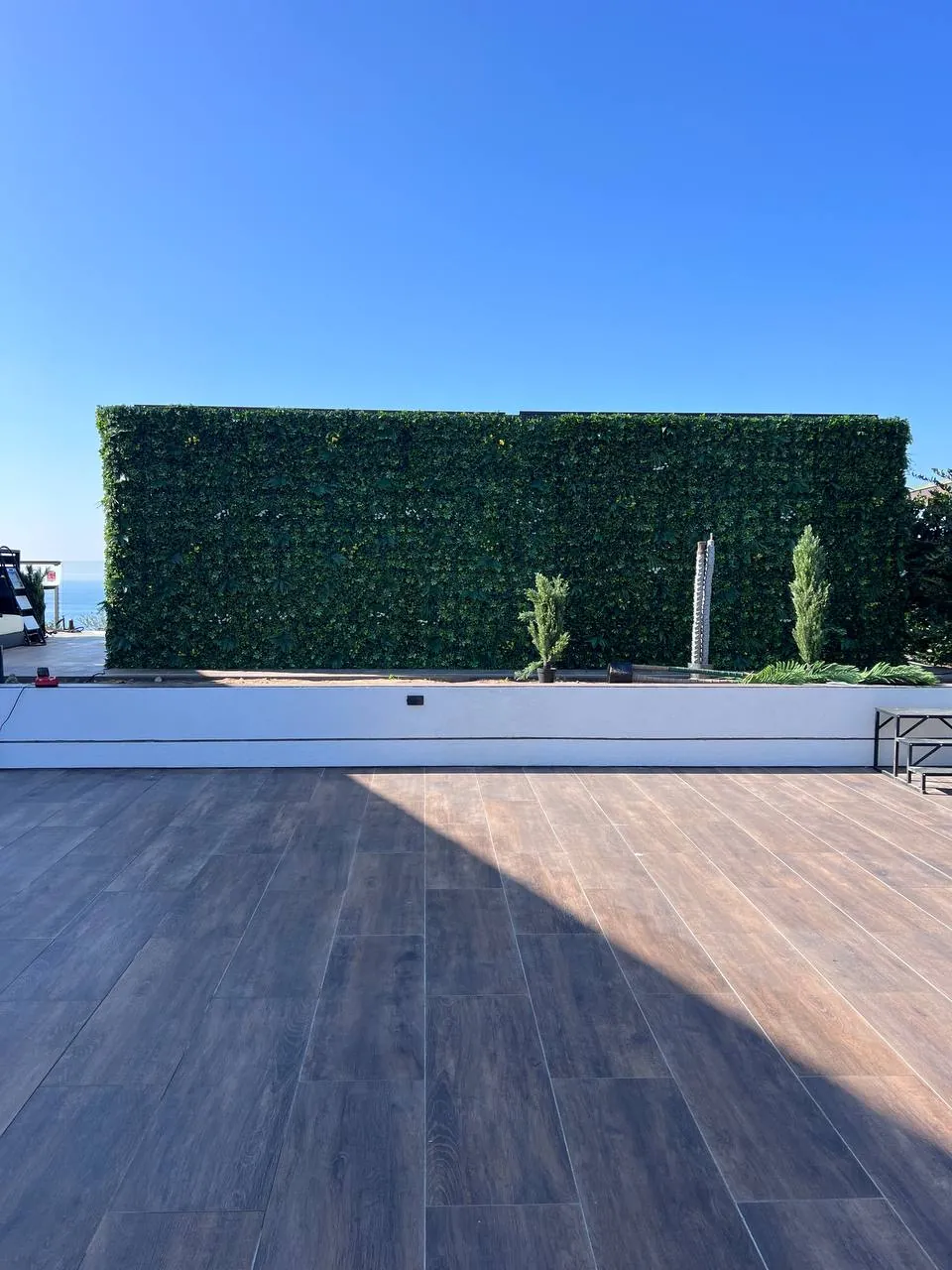
San Diego weather means the backyard gets used year‑round — so it's worth doing right. Easy Break handles the full range of outdoor work: new decks and deck repair, pergolas and shade structures, gazebo and cabana assembly, paver patios, and artificial‑turf lawns that stay green with zero watering. Whether you want to fix a few rotten deck boards or turn a tired yard into a finished hangout, we'll scope it and give you a free, fixed estimate.
We build with materials that hold up to coastal sun and marine air — pressure‑treated and composite decking, powder‑coated and cedar pergolas, and commercial‑grade turf with proper base prep and drainage so it drains and doesn't ripple.
Outdoor projects we take on
- Deck repair — replace rotten boards, re‑secure railings, re‑level
- New decks & platforms — wood or composite
- Pergolas & shade structures — kits or custom builds
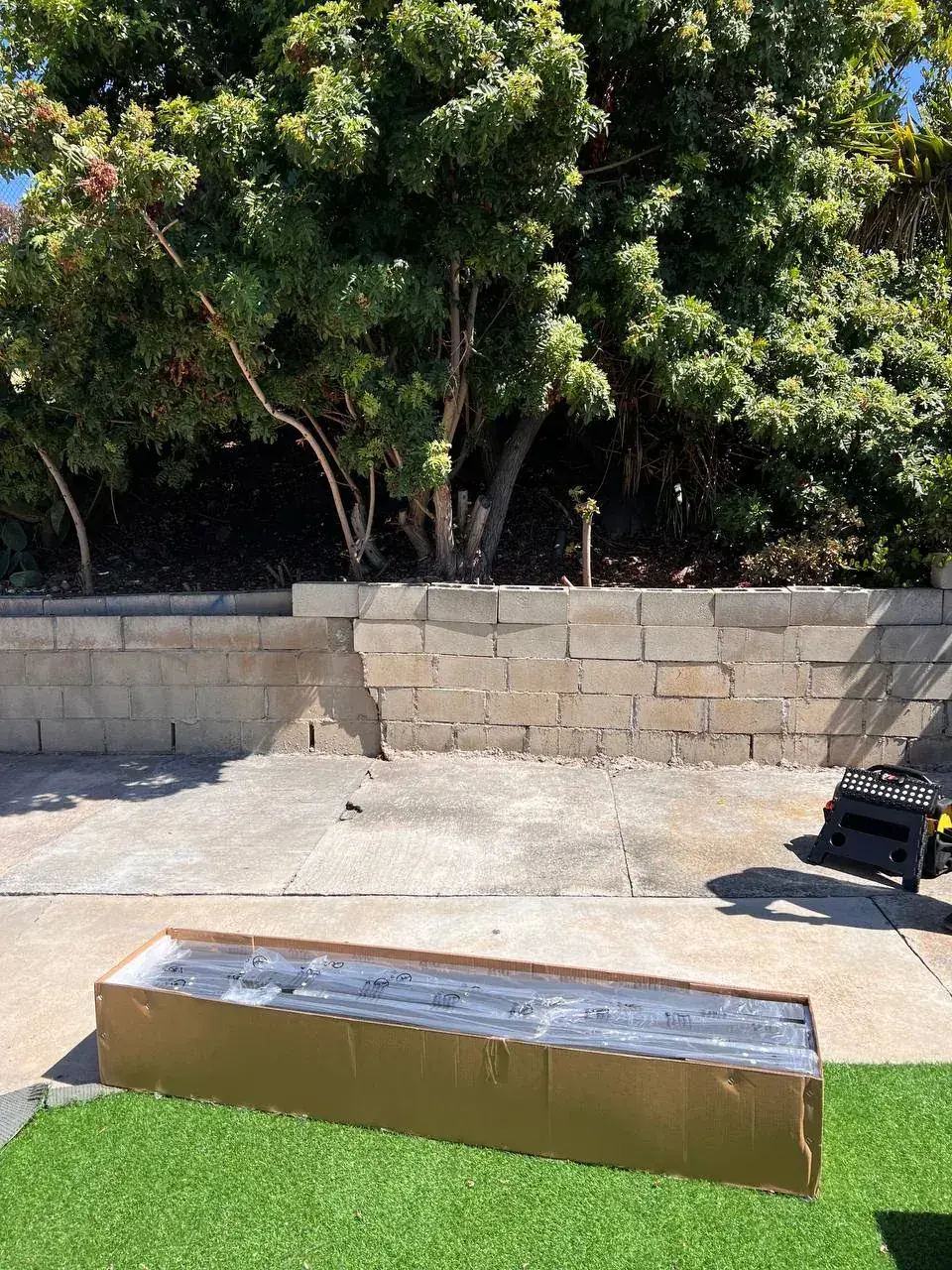
- Gazebo, cabana & pavilion assembly
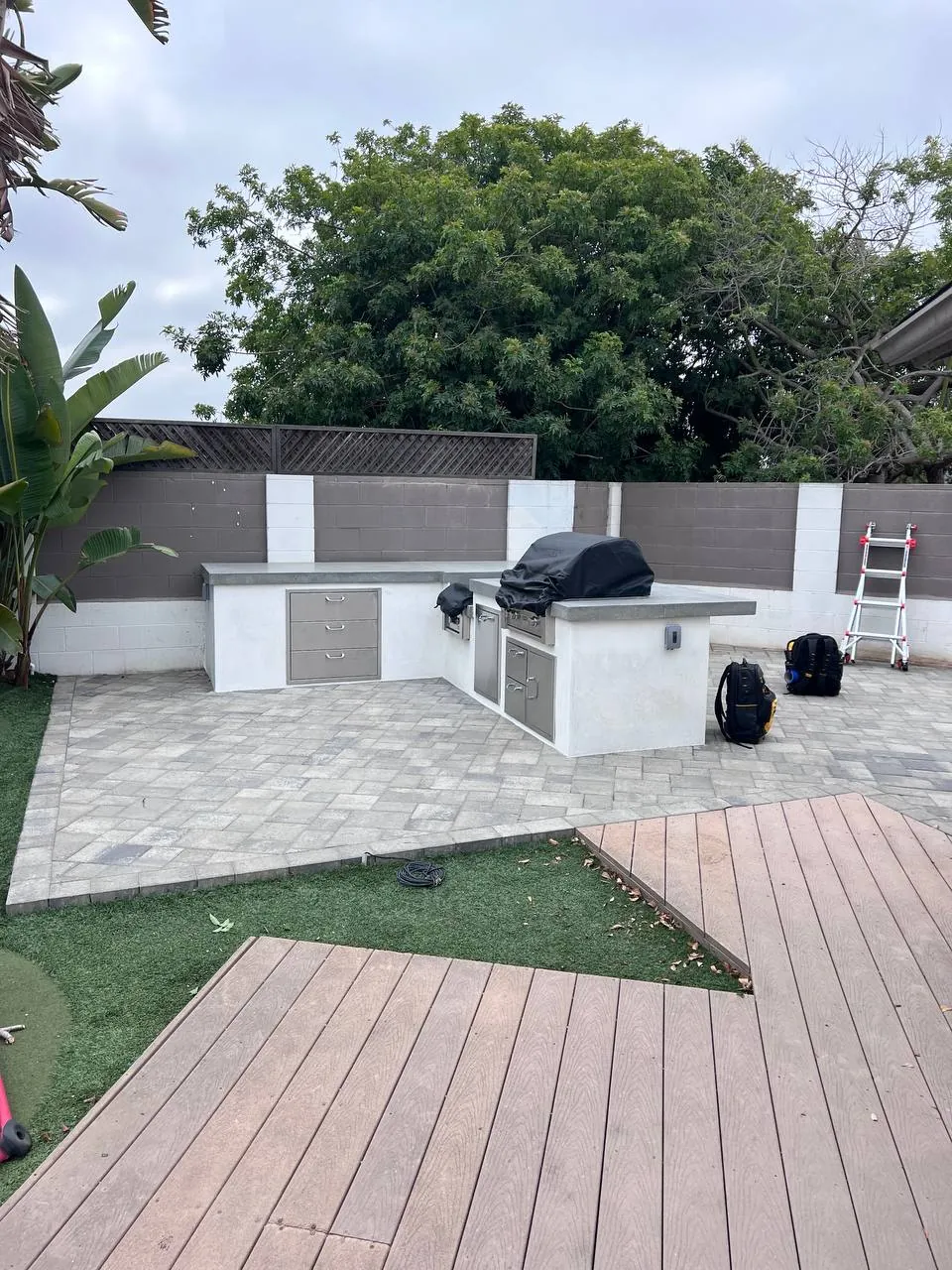
- Paver patios & walkways
- Artificial turf — base prep, install & edging
Outdoor & deck pricing in San Diego
Outdoor work varies a lot with size, materials and site access, so we give a free, fixed estimate from photos. Typical starting points:
| Service | What's involved | Price |
|---|---|---|
| Deck board replacement | Swap rotten boards, re‑secure | from $149 |
| Pergola / gazebo assembly | Kit build, anchored & level | from $299 |
| New deck / platform | Wood or composite | free estimate |
| Artificial turf install | Base prep, turf & edging | from $6/sq ft |
| Paver patio / walkway | Base, sand & pavers | free estimate |
Dreaming about the backyard?
Text a photo of the space — we'll send a free estimate and ideas.
Repair, refresh or build new
Not every deck needs replacing. We'll tell you honestly whether swapping boards and re‑sealing buys you years, or whether the framing is past it — and quote your options so you choose. Same with pergolas and turf: we'll right‑size the project to your yard and budget.
Why San Diego picks Easy Break outdoors
- Free, fixed estimate from a photo
- Composite or wood decking, cedar or metal pergolas
- Turf with real base prep & drainage — no ripples
- Honest repair‑vs‑replace advice
- Licensed, insured & 90‑day workmanship guarantee
Areas we serve
Outdoor living projects throughout San Diego County, including:
Outdoor & deck FAQ
How much does a pergola or gazebo cost to assemble in San Diego?
Do you install artificial turf?
Can you just repair my deck instead of replacing it?
Do I need a permit for a deck or pergola?
Do you build paver patios and walkways?
Decking materials — honest tradeoffs
The decking aisle is full of marketing. The real decision tree for San Diego:
- TimberTech AZEK — capped polymer (PVC, no wood core); the most weather‑stable option, won't absorb water, 50‑year limited fade & stain warranty. Premium price. Our default for Coronado, La Jolla, Pacific Beach where salt air destroys everything else.
- Trex Transcend — capped composite (recycled wood + plastic with a polymer shell); 25‑year fade & stain warranty, mold‑resistant. The most common premium pick, mid‑$$$. Transcend lines: Vintage, Tropicals, Spiced Rum, Tiki Torch.
- Trex Enhance / Trex Select — Trex's mid and entry tiers; lighter cap, shorter warranty.
- Fiberon Sanctuary and MoistureShield Vision — capped composite, comparable to Trex Enhance, often a better price point.
- Deckorators Vault — mineral‑based composite; lighter than wood‑filled composites, stays cooler underfoot (real benefit in inland SD summer).
- Western Red Cedar — cheaper upfront, smells great, looks beautiful for two years. Requires TWP 100 series or equivalent stain every 2 years; 15–20 year life with maintenance. Skip the maintenance and it goes silver/gray and starts cupping.
- Construction Heart redwood — premium wood, similar maintenance to cedar, harder to source post‑2020.
- Pressure‑treated Douglas Fir — cheapest, 8–12 years with paint/stain. Fine for a budget refresh or sub‑structure framing; we don't recommend it as a finish surface anymore.
- IPE — gorgeous Brazilian hardwood, expensive, requires stainless fasteners and oiling. Rare in SD residential but happens on premium La Jolla and Solana Beach builds.
For salt‑air coastal homes (within ~1 mile of the water) we strongly recommend capped composite or aluminum. The maintenance gap between cedar and capped composite pays back in about 6 years on a coastal deck.
Hidden fasteners and a deck with no visible screws
Face‑screwing composite boards used to be the only option, and the screw holes telegraphed forever. Two systems we use now to get a clean surface:
- Camo Edge Deck fasteners — clip and screw enter the edge of the grooved board into the joist below. Zero screws visible on the top surface. Works on most grooved‑edge composite (Trex, TimberTech, Fiberon).
- Cortex hidden plugs — face‑screw with a Cortex screw, then plug the hole with a matching plug cut from the same decking. Used for board ends and any non‑grooved board.
- Hidden Link — flat steel clip system, also edge‑fastening, works on a wider range of board profiles.
Structural framing goes together with Simpson Strong‑Tie connectors: LUS and LSSU joist hangers, ABU or CBSQ post bases at every concrete pier. For premium framing we use GRK R4 structural screws over standard lag bolts where the connector calls for it — faster, no pre‑drilling, code‑listed.
Pergolas — kit vs custom vs motorized louvered
"Pergola" covers four very different products:
- Wood kit (Yardistry) — Costco carries the Yardistry cedar line in 10×10, 12×12 and 12×14. DIY‑friendly assembly with two people; we usually build them in a day. Real cedar means annual sealer to stay golden — skip a year and they silver out.
- Aluminum kit (Sojag, Sunjoy) — powder‑coated aluminum frame, polycarbonate or fabric roof. Zero maintenance, lighter assembly, less character than wood. Good for renters and HOA‑heavy neighborhoods.
- Steel kit (Sunjoy Riplie series) — steel frame with a hard roof panel; the look of a pavilion at pergola pricing.
- Motorized louvered (StruXure Pergola X, Equinox) — aluminum louvers that pivot open or closed on motor; rain sensors close them automatically. This is the actual "outdoor room" — open shade in the morning, full cover at noon, closed against marine layer drizzle. $25k–$60k range installed. We refer larger StruXure installs to certified dealers; we install Equinox and similar lighter systems.
- Shade sail — fast, cheap (under $1k), no permit, replace the fabric every 5 years from UV breakdown. A real answer for renters and small budgets.
Paver patios — the base is the whole job
Anyone can put pavers on dirt. Two years later the pattern looks like an ocean wave because the base was never built. We do the unglamorous part:
- Excavate 8–10" below finish grade
- Geotextile fabric over the subgrade (stops base material from migrating into the dirt below)
- 4–6" of Class II base (3/4" crushed rock with fines) compacted in 2" lifts with a plate compactor
- 1" leveling course of coarse sand, screeded flat
- Set pavers — Belgard Old World Stone, Nicolock, Techo‑Bloc, Borgert, or Pacific Pavingstone (local SD supplier we use for color matching)
- Edge restraint — concrete edging or PVC snap edge spiked every 12"; pavers without edge restraint walk apart
- Polymeric sand joints (Techniseal NexGen or HP Nextgel) swept into joints, misted to activate; hardens into a flexible joint that resists weeds and ants
If a paver quote comes in cheaper because they skipped the geofabric and only put 2" of base, that patio will fail in 18 months. We do the prep — don't trust install‑only quotes.
Artificial turf — face weight, pile and what actually lasts
Turf is sold by face weight (oz/sq yd of yarn): 50 oz is cheap and matty, 70–90 oz is the residential sweet spot, 100+ oz is premium with a denser feel. Pile height of 1.5" is standard for residential; shorter for putting greens, longer for "luxury lawn" look. Brands we install:
- SynLawn — premium, plant‑based backing, HeatBlock infrared‑reflective yarn (real difference on a 90° inland day)
- EasyTurf — local SD supplier, FieldTurf‑owned, strong product line
- Global Syn‑Turf — value‑to‑premium range, well stocked locally
- Heavenly Greens and Perfect Turf — mid‑market
For pet households we use Zeolite infill instead of standard silica sand — zeolite captures ammonia from pet urine and dramatically cuts the smell. Base prep is the same as for pavers: 4" Class II compacted, leveled DG (decomposed granite) as a screed layer, nailed perimeter every 6" with 6" galvanized nails, seam tape and turf glue between rolls every 15'. Drainage holes punched every 2–3 sq ft.
Fire pits, outdoor kitchens — gas, surface, clearance
The two gas questions decide everything: propane is self‑contained (we install a fire pit or kitchen and run a 20‑lb tank inside the enclosure); natural gas requires a black‑iron line from the house meter — that's a licensed plumber's scope and a permit, and the run length sets the BTU available at the appliance. Have the plumber in before we set countertops.
Outdoor kitchen counter material — Dekton (porcelain) and natural stone (granite, basalt) are outdoor rated. Quartz is not — UV breaks down the resin binder and the surface yellows in 18 months. We see this every year.
Fire pit clearances per IRC: 3 feet from combustibles on all sides, fire brick lining (FireRock or similar) on the interior, gravel base under the burner pan. Built‑in grills (Blaze, Bull, Lion Premium, Coyote, RCS Renaissance) ship with required clearance specs printed inside the manual — we follow them; insurance loss adjusters look for this.
Permit reality — what triggers what
- Deck more than 30" above grade — requires permit and a 42" handrail with 4" max baluster spacing (CBC). Stairs over 4 risers need handrails as well.
- Deck attached to the house — almost always permitted regardless of height (ledger flashing matters; bad ledgers caused the famous deck collapses).
- Freestanding pergola under 120 sf — typically no permit in unincorporated SD County; the City of San Diego, Carlsbad, Encinitas, Chula Vista all set their own thresholds. We check the AHJ first.
- Attached pergola (touches the house) — usually requires a permit.
- Concrete patio under 200 sf at grade — usually no permit.
- Retaining wall over 4' — engineered drawings and a soils report, every jurisdiction.
Edge cases
- Deck‑on‑existing‑tile patio — we sleeper‑frame over the slab and lay Trex on top. The slope of the original slab matters; if it pitches more than 1/4" per foot toward the house we shim to correct.
- Two‑story decks with cantilever — these need stamped engineered specs, not handyman work.
- HOA stain colors — many SD HOAs spec Olympic Maximum Cedar Natural #56 or similar; we'll match what the HOA approved before staining.
- Slope correction — anything over a 1% grade across the deck/patio area is a grading job; we partner with a local grader for prep.
What we don't do
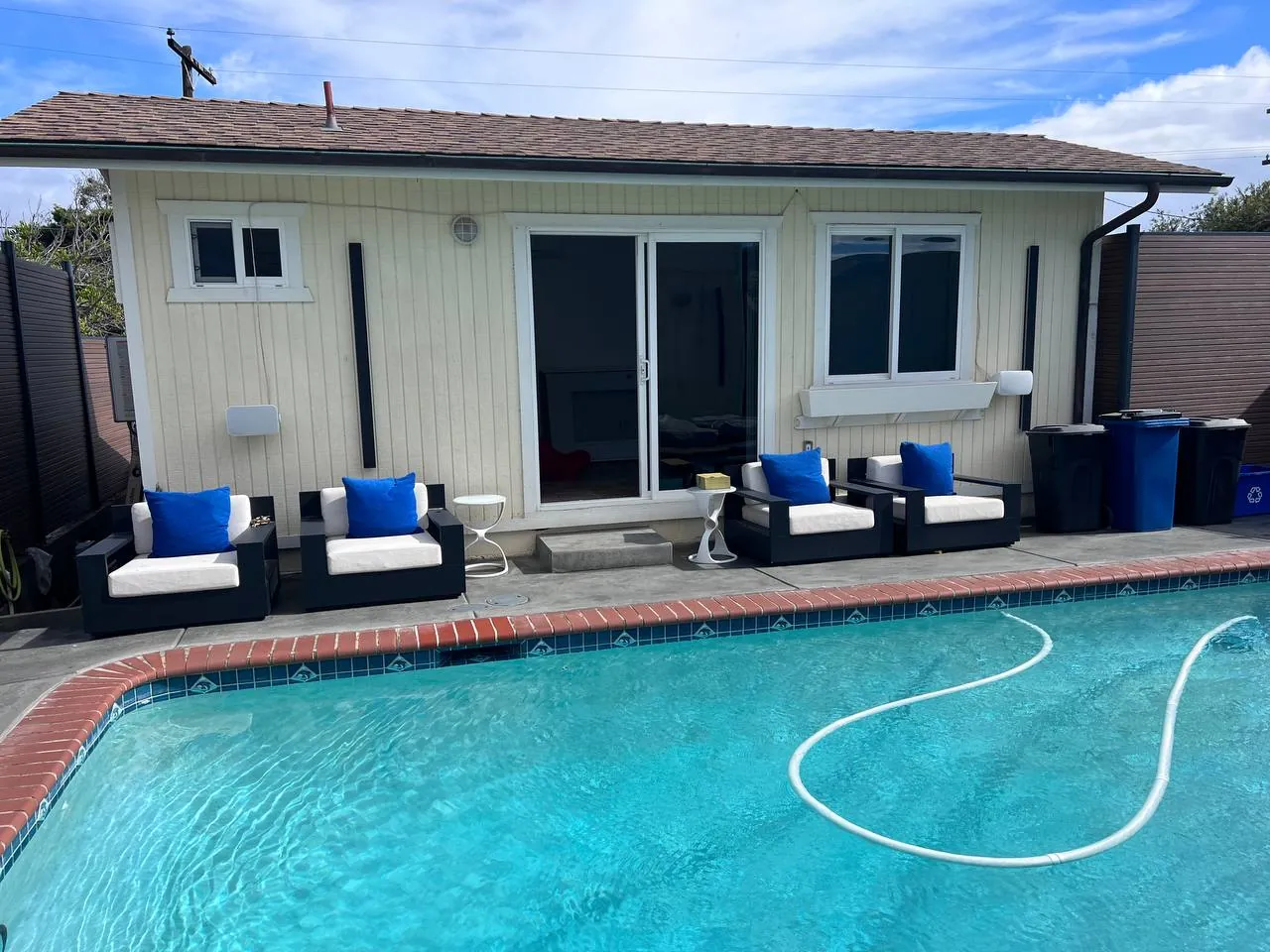
We don't build roofed patio covers or solid‑roof structures attached to the house (that crosses into general contractor scope — engineered roof loads, structural attachment to existing framing; we partner with local contractors for those). We don't pour concrete slabs larger than ~200 sf (we partner with a concrete sub for big pours). We don't do spa or pool decking (spa decks have specific point‑load engineering, and pool surrounds are usually under the pool builder's contract). And we don't take on major grading work — anything beyond a small level pad needs a grader with a skid steer and proper soil engineering.